Free Ebook Monastic Visions: Wall Paintings in the Monastery of St. Antony at the Red Sea, by Elizabeth S. Bolman
If you obtain the printed book Monastic Visions: Wall Paintings In The Monastery Of St. Antony At The Red Sea, By Elizabeth S. Bolman in online book shop, you could also find the exact same trouble. So, you need to relocate shop to store Monastic Visions: Wall Paintings In The Monastery Of St. Antony At The Red Sea, By Elizabeth S. Bolman and also search for the readily available there. But, it will not take place here. The book Monastic Visions: Wall Paintings In The Monastery Of St. Antony At The Red Sea, By Elizabeth S. Bolman that we will certainly offer here is the soft data concept. This is exactly what make you could easily find as well as get this Monastic Visions: Wall Paintings In The Monastery Of St. Antony At The Red Sea, By Elizabeth S. Bolman by reading this site. Our company offer you Monastic Visions: Wall Paintings In The Monastery Of St. Antony At The Red Sea, By Elizabeth S. Bolman the very best item, consistently and consistently.
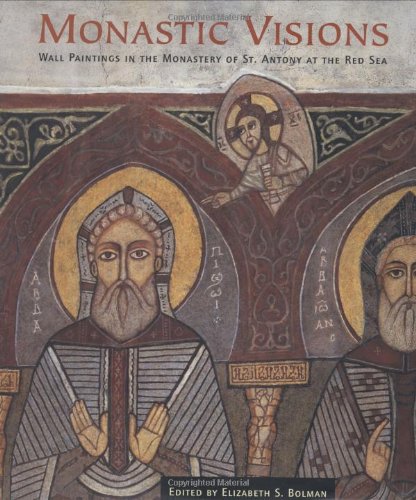
Monastic Visions: Wall Paintings in the Monastery of St. Antony at the Red Sea, by Elizabeth S. Bolman

Free Ebook Monastic Visions: Wall Paintings in the Monastery of St. Antony at the Red Sea, by Elizabeth S. Bolman
Just what do you do to start reviewing Monastic Visions: Wall Paintings In The Monastery Of St. Antony At The Red Sea, By Elizabeth S. Bolman Searching guide that you like to review first or discover a fascinating book Monastic Visions: Wall Paintings In The Monastery Of St. Antony At The Red Sea, By Elizabeth S. Bolman that will make you intend to check out? Everyone has distinction with their reason of checking out a publication Monastic Visions: Wall Paintings In The Monastery Of St. Antony At The Red Sea, By Elizabeth S. Bolman Actuary, reviewing routine must be from earlier. Many individuals could be love to check out, yet not a book. It's not fault. Somebody will certainly be burnt out to open up the thick publication with small words to read. In even more, this is the genuine problem. So do take place most likely with this Monastic Visions: Wall Paintings In The Monastery Of St. Antony At The Red Sea, By Elizabeth S. Bolman
When some individuals looking at you while checking out Monastic Visions: Wall Paintings In The Monastery Of St. Antony At The Red Sea, By Elizabeth S. Bolman, you could feel so proud. Yet, rather than other individuals feels you should instil in on your own that you are reading Monastic Visions: Wall Paintings In The Monastery Of St. Antony At The Red Sea, By Elizabeth S. Bolman not because of that reasons. Reading this Monastic Visions: Wall Paintings In The Monastery Of St. Antony At The Red Sea, By Elizabeth S. Bolman will certainly give you more than individuals admire. It will certainly overview of know greater than the people looking at you. Even now, there are numerous resources to discovering, reading a book Monastic Visions: Wall Paintings In The Monastery Of St. Antony At The Red Sea, By Elizabeth S. Bolman still ends up being the front runner as a great means.
Why ought to be reading Monastic Visions: Wall Paintings In The Monastery Of St. Antony At The Red Sea, By Elizabeth S. Bolman Once again, it will certainly rely on just how you feel and think about it. It is surely that a person of the advantage to take when reading this Monastic Visions: Wall Paintings In The Monastery Of St. Antony At The Red Sea, By Elizabeth S. Bolman; you can take a lot more lessons directly. Even you have actually not undertaken it in your life; you can acquire the encounter by reviewing Monastic Visions: Wall Paintings In The Monastery Of St. Antony At The Red Sea, By Elizabeth S. Bolman And also now, we will certainly present you with the on the internet book Monastic Visions: Wall Paintings In The Monastery Of St. Antony At The Red Sea, By Elizabeth S. Bolman in this web site.
What type of book Monastic Visions: Wall Paintings In The Monastery Of St. Antony At The Red Sea, By Elizabeth S. Bolman you will favor to? Now, you will certainly not take the printed publication. It is your time to get soft documents book Monastic Visions: Wall Paintings In The Monastery Of St. Antony At The Red Sea, By Elizabeth S. Bolman instead the printed papers. You could appreciate this soft data Monastic Visions: Wall Paintings In The Monastery Of St. Antony At The Red Sea, By Elizabeth S. Bolman in any time you anticipate. Even it is in expected place as the other do, you can review guide Monastic Visions: Wall Paintings In The Monastery Of St. Antony At The Red Sea, By Elizabeth S. Bolman in your gadget. Or if you desire a lot more, you can read on your computer or laptop computer to obtain complete display leading. Juts find it right here by downloading and install the soft documents Monastic Visions: Wall Paintings In The Monastery Of St. Antony At The Red Sea, By Elizabeth S. Bolman in web link page.
An ancient church in the Coptic Monastery of St Antony at the Red Sea contains a unique cycle of 13th-century wall paintings. They constitute by far the most complete and best-preserved iconographic programme of Christian paintings to come from medieval Egypt. Ignored for centuries because they were covered with soot and overpainting, these compelling images have recently undergone conservation. This volume reproduces the cleaned paintings. It also describes and analyzes the amalgam of Coptic, Byzantine and Arab styles represented, and the social world of the artists that created the images. This book celebrates a unique program of conservation work conducted by the American Research Centre in Egypt.
- Sales Rank: #1721879 in Books
- Published on: 2002-02-01
- Original language: English
- Number of items: 1
- Dimensions: 12.25" h x 10.50" w x 1.50" l, 5.11 pounds
- Binding: Hardcover
- 342 pages
Review
"Bolman makes the arcane accessible and the spiritual meaningful. This is how art history, usually seen as an elitist activity, should be written up in a democratic society." Anthony Cutler, Penn State University Art
From the Publisher
Published in association with American Research Center in Egypt, Inc.
From the Back Cover
"Bolman makes the arcane accessible and the spiritual meaningful. This is how art history, usually seen as an elitist activity, should be written up in a democratic society."—Anthony Cutler, Penn State University
Most helpful customer reviews
1 of 1 people found the following review helpful.
Five Stars
By Paul J. Conn
This discovery should have been front page news.
14 of 14 people found the following review helpful.
Informative and Entertaining
By hapixii
This is a well-written book with excellent photographs. This book presents the results of conservation efforts for medieval age Christian Egyptian, Coptic, wall paintings at Saint Anthony monastery, Egypt. The monastery is believed to be the first Christian monastery in the world. In the preface, the writers outlined the genesis of this conservation effort. They also provided progress photographs for some of the early and limited test cleaning work that showed the promising and extraordinary work of art that was underneath centuries of grime and over painting. The preservation and restoration efforts were funded by a grant from the United States Agency for International Aid (USAID).
As an American from Coptic ancestry, I would like to express thanks and appreciation to the American people, government and the USAID for their support for the conservation work of the Coptic cultural heritage and art.
The book outlines the history and life of Saint Anthony the great (251-356 AD). Saint Anthony is considered to be the father of or originator of monasticism. However, there is evidence that the ancient Egyptians temples included devotees, who led lives of prayer, learning and pursuit of wisdom, celibacy, and poverty, e.g. the story of Ptolemaios and Harmais the Serapeum temple devotees circa 164-158BC. It could be argued that, the Egyptian converts to Christianity continued to use of their past artistic and cultural heritage in new or modified ways compatible with Christian teaching. For example the Copts continued to use the ancient Egyptian ankh symbol in conjunction with the cross. Artifacts from the early centuries AD show the use of both the ankh and the cross. Contemporary Copts continue to use the ankh and the cross together as jewelry pieces. Similar arguments could be made about the artist rendering of Isis and baby Horus, which may have been used by early Coptic artists as a model to portray the Virgin Mary and baby Jesus. Saint Anthony the great led a solitary life in the desert. Accordingly the Coptic/Greek term monachos or monk in English was used. Saint Athanasius the Apostolic of Alexandria (296-373 AD) introduced monasticism to the west through his famous book the Life of Anthony. Contrary to the image painted for Anthony as an unlettered person, the book comments on letters of Anthony, of which seven are extant. The letters show Anthony to be well versed in platonic philosophy and Alexandrian theological traditions. Furthermore his letters emphasize gnosis or knowledge, and echoes the Greek philosophical tradition," Know thyself".
The book is written by several authors from different disciplines art history, history, archaeology, anthropology, and art conservation. The contributors to the book are mostly Americans and Copts from Egypt. The conservation team was led by Adriano Luzi and Luigi De Cesaris from Italy. Luzi and De Cesaris participated prior to this effort in the conservation of the paintings in the tomb of Nefertari. The main wall paintings in the monastery were originally the work of a team Coptic artists led by a master artist, Theodore Zographos, the painter, or the writer of life in Greek, circa 1232-1233 AD. The book indicates that the Coptic Church did not enjoy any royal patronage that could have helped funding churches or monasteries. The temporal rulers of Egypt from about 640AD were Muslims, and far from donating funds for churches, they actually taxed monks and forbade them from building churches without permission. The high-quality paintings in the Church of Saint Anthony were painted on dry plaster, in a technique called secco. Neither the pigments nor the plaster were of more than modest cost. About 33-40 Copts are believed to have been the patrons of the 13th century artwork. In addition to paying for the project, one or more of these 13th century Coptic patrons are likely the designers of the painting program. The style of Theodore is thoroughly Coptic, however the 13th century art is different from the first centuries of Christian art in Egypt. It is possible to discern the influence of Islamic, Byzantine and even Romanesque arts on the Coptic art of that era. The conservation work shows 6 layers of paintings, some of which date back the 5th-7th century. The results of the conservation work further indicate that the newly visible early 13th century paintings are so greatly at odds with art historical expectations that they mandate a near total reevaluation of the Coptic art after the Arabs conquest of Egypt.
This is a book that provides both entertainment and information. It would be a good addition for art, art history, and conservation aficionados.
7 of 8 people found the following review helpful.
Monastic Visions in St. Antony Mural Paintings
By TheoGnostus
"Bolman makes the arcane accessible and the spiritual meaningful. This is how art history, usually seen as an elitist activity, should be written up ..." Anthony Cutler, Penn State University
Monastic Father:
Saint Anthony is often called 'Father of the Monastics,' being credited with the founding of Christian monasticism, many of his ideals still survive to this day. Most of what we know about St. Anthony comes from a biography by his close friend Athanasius, Archbishop of Alexandria. Anthony was born about AD 251 for a rich Christian family of Coma, in mid upper Egypt. Hearing Christ address to the rich young man, he left everything to start monastic desert dwelling.
St. Anthony's Monastery:
Hidden deep within the Red Sea Mountains and depending on local springs for their water needs, St. Anthony's Monastery and its neighboring St. Paul, are the oldest inhabited monasteries in eastern Egypt. Monks in both communities still observe ancient monastic schema that have been established by Anthony's disciple Macarius for more than fourteen centuries. During the sixth and seventh centuries many monks from the Skete, in today's Wadi El Natroun desert, migrated to St. Antony's dwellings and established this monastery, to avoid the frequent attacks by Bedouins. St. Anthony monastery was plundered many times, and even destroyed in part during the 11th century. This remotely located cenobitic community flourished during the 12th to 14th centuries, but was plundered again in the mid 15th by Sinaitic Bedouins, after which attacks it acquired its fortress style walls. Like many ancient antiquity Egyptian monasteries, over many years of its existence it was ecumenical, hosting monks of different ethnicity, especially Henophysite orthodox from the fertile crescent.
A fine team work:
At the request of the Ancient Monastery of St. Anthony, the conservation of the paintings in the church began in 1996. The American Research Center in Egypt could allocate funds through the US AID, for its Antiquities Development Project. Some newly discovered paintings can be dated back to the sixth or seventh century, but the main bulk is traced to the 12/13 century. These high quality revealed mural paintings demonstrate a stylistic and conceptual iconic tradition established by the early Christians of Egypt, but reveal an influence of Byzantine and even Islamic art of the era.
Iconic Theology:
Since an icon is said to be written, it should be properly read, by looking through it into eternity as iconphiles always claimed. One icon is more impressive than many books on theology, and more edifying than a sermon, it offers a link with the victorious Church. Thus was the original reason in Alexandria, its founder, to utilize icons in teaching the faith to those who knew not reading, young and old. The Miaphysite Copts and Syrians, whose theology dominated the mid Orient before the advent of Islam, were still concerned with the unity of the person of Christ, that even the transfiguration icon failed to demonstrate how Christ's Divine nature could be revealed. Praying with icons became a Byzantine doctrine, that the feast of Orthodoxy is the commemoration of its restoration.
Coptic Mural Paintings:
Dr. George Bebawi, Nottingham's Patrologist, exhorts that the central office of Coptic Icons was educational. He takes the ancient Coptic murals exemplified by the pre icon era of Deir Bawit murals, to explain that the Coptic Church, first to introduce Icons, meant them as teaching aids, posting them on the ceiling, or as a later tradition, high on the iconstatis.
As for the saints, Fr. Matthew the poor, abbot of St. Macarius, explains the Coptic conception of icons as, "mystical mediation through saint's icons could be explained by Copts behavior, when praying for virtual benediction, in front of a saint's icon, an exercise of remote fellowship, a confession of a spiritual gap yet to be crossed in their eternal fellowship."
Team beyond a Book:
The authorship of this book is the result of a team work of an art historians, conservators, an archaeologist, and an anthropologist, that gives an elaborate account on the medieval church and an informed discussion of the meaning beyond these revelations. The authors attempt to place those wonderful paintings within the artistic and historical icon traditions of both Coptic Egypt and evaluate the influence of the mediaeval eastern Mediterranean.
Fr. Maximus Anthonite, helped the author, Dr. Elizabeth Bolman, professor of medieval art history at Temple University. Some of the contributors are Luigi De Cesaris, Mark Easton, Gawdat Gabra, Patrick Godeau, Michael Jones, Adriano Luzi, William Lyster, Robert Vincent., Jr., and Elizabeth E. Oram. Patristic Scholarship of Fr. Sidney Griffith, Dr. Birger Pearson, and Fr. Tim Vivian added a special flovor to the project's outcome and evaluation.
Monastic Visions: Wall Paintings in the Monastery of St. Antony at the Red Sea, by Elizabeth S. Bolman PDF
Monastic Visions: Wall Paintings in the Monastery of St. Antony at the Red Sea, by Elizabeth S. Bolman EPub
Monastic Visions: Wall Paintings in the Monastery of St. Antony at the Red Sea, by Elizabeth S. Bolman Doc
Monastic Visions: Wall Paintings in the Monastery of St. Antony at the Red Sea, by Elizabeth S. Bolman iBooks
Monastic Visions: Wall Paintings in the Monastery of St. Antony at the Red Sea, by Elizabeth S. Bolman rtf
Monastic Visions: Wall Paintings in the Monastery of St. Antony at the Red Sea, by Elizabeth S. Bolman Mobipocket
Monastic Visions: Wall Paintings in the Monastery of St. Antony at the Red Sea, by Elizabeth S. Bolman Kindle
